Make money doing the work you believe in

Nobody Tells America to Get Over 9/11
Today is the National Day for Truth and Reconciliation in Canada, a day dedicated to honouring survivors of residential schools and remembering the children who never came home.
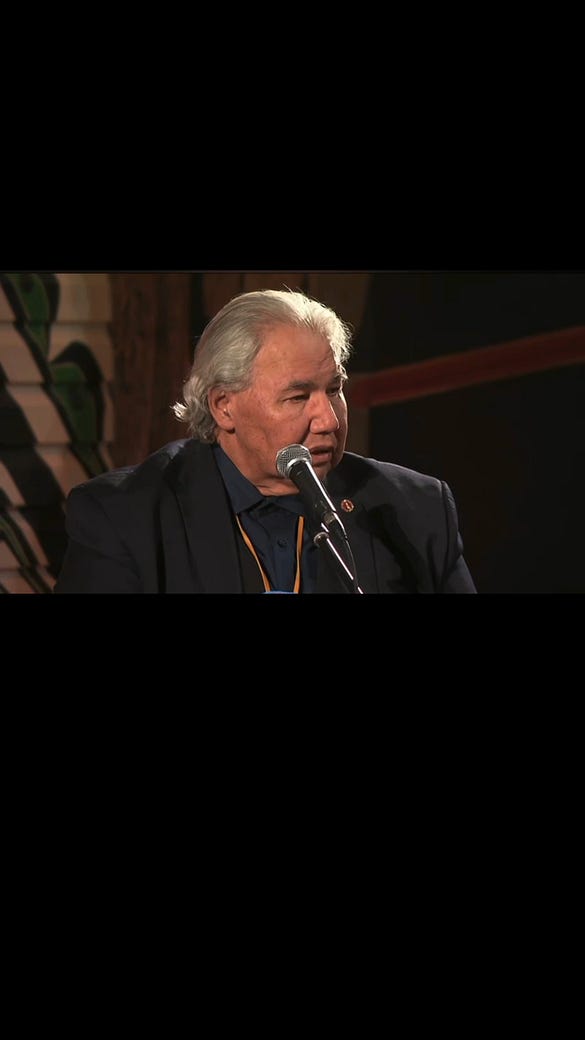
To understand what this day represents, you have to know the words of Murray Sinclair.
Murray Sinclair was an Anishinaabe judge, senator, and legal scholar in Canada. He passed away on November 4, 2024.
For an audience outside Canada, understanding his words requires context about the history he spent his career addressing.
For more than a century, Canada operated a network of boarding schools funded by the government and administered by churches, known as residential schools.
Similar to the federal Indian boarding school policy in the United States, authorities systematically separated more than 150,000 Indigenous children from their families and communities to eradicate their languages, cultures, and traditions.
Thousands of children died from disease, starvation, neglect, and abuse, while generations of survivors returned home bearing severe trauma.
To confront this past, Canada established the Truth and Reconciliation Commission.
The commission was an official national inquiry created to travel across the country, gather public testimony from thousands of survivors, inspect historical archives, and educate the public on the devastating legacy of the school system.
Sinclair led this national effort as its chief commissioner.
During his work and in subsequent national broadcasts with CBC, Sinclair frequently challenged critics who questioned why Indigenous people continued to speak about their past instead of moving forward.
He compared that to how nations preserve memories of major tragedies:
"The question that often gets asked is,
'Why can't you just get over it and move on?'
My answer is always:
'Why can't you always remember this?'
Because this is about the history of Canada that we need to begin to accept, that this is what happened.
We remember the Holocaust.
We remember the First World War and the Second World War.
We remember 9/11.
Why do you not tell America to get over 9/11? Nobody would ever tell Americans to forget the horror of that day.
Every year on November 11th, we tell citizens, 'Lest we forget.'
We wear poppies on Remembrance Day and erect monuments in almost every town and village across this country to honour those who suffered and died.
We teach our children about wars and national sacrifices.
We do not tell military veterans to just get over it.
We tell them that we will never forget.
Why would we want to forget this?
This is part of who we are as a country.
If you want to understand why Indigenous people are in the position they are in today, you need to understand that this is the reason.
But when it comes to the children who died in residential schools, or the survivors who carry that trauma, people ask,
'Why can't you just get over it?'
My answer remains:
'Why can't you always remember this?'"