Make money doing the work you believe in

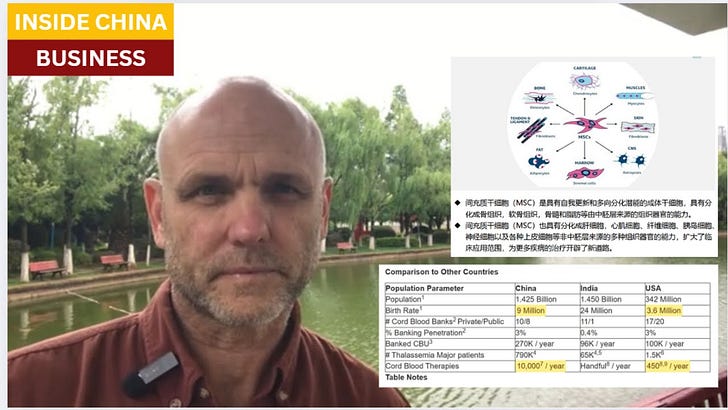
Kudos for bringing attention to this important subject. Nonetheless, I think you might be missing part of the story here. To our knowledge access to MSC stem cell treatment in China remains fairly limited, since "ordinary" patients typically cannot get them via public hospitals. "Typically" means that there are exceptions, but these exceptions usually require "guanxi" -- i.e. special relationships. Either that or you find a private clinic, of which there are countless ones, almost all unlicensed and operating based on word of mouth promotion only.
Until around 2008 this was a different matter. Back then treatment was accessible for everyone, and Tiantan Hospital in Beijing in particular attracted stem cell medical tourism from all around the world. After that access was restricted to high level party members only, for murky reasons which, ahem, we had perhaps better not speculate on publicly. For almost a decade thereafter Chinese looking for stem cell treatment mostly went to North America. We wrote about this in our overview of the good and bad in China's medical system here:
Unsurprisingly in the end the trusty Chinese attraction to business opportunities managed to gain the upper hand, with the result that black market stem cell treatment offerings began to proliferate all across China's major cities. These clinics often also offer other types of blood treatment, such as natural killer cell cultivation. Prices are roughly on par with Mexico, which is the world's most competitive (open) market for MSC stem cells.
Prices in the US are still significantly higher (2-3x the Mexican price level), but most major cities have clinics offering them, with the US government practicing a "Don't Ask, Don't Tell" policy since the beginning of the first Trump Administration in 2016. In other words, many clinics pretend to use autologous stem cells, for example gleaned from fat cells, while in reality using the ones derived from umbilical cords.