The app for independent voices

time rarely has only one tale to tell. when we meet a memory that feels not like our own, yet somehow ours alone, there is a loss that can linger. sometimes we get a glimpse of sights and sounds from years long past that persist, too visceral to dismiss as the drizzle of dreams. the word for this ache is anemoia /ˌænəˈmɔɪə/, coined by writer john koenig in 2012. it names "nostalgia for a time or a place one has never known", and originates from the ancient greek ánemos ('wind') and -oia ('state of mind'). this anachronistic ally can't be rationalized by experience alone, though. even science falters on what is considered fiction, noting how the same neural networks light up whether we're remembering real or imagined events. of course there will be some who insist we're merely romanticizing the past, but others invite the possibility that we've walked this path before. and while anemoia won't offer us an escape, it can guide us back to a home of which we've only ever heard. perhaps this is the present of the past, not to erase but embrace the lives we've lived under a different name, but with a resplendent soul shimmering all the same.
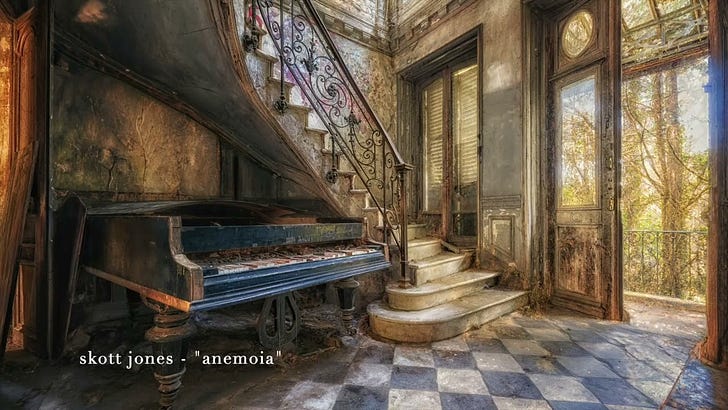
in this original piano composition, one saunters passed answers in search of absolution. healing is within heart's reach, yet remembering must never be rushed. as the tempo tiptoes forth, memories make their way through a fog until recollection transforms into reunion. in the finale, a waltz whisks the listener away to dance in the hall of dreams, that enchanting realm where reverie blurs with each soft step. the mind at last abandons its authority, joining the body in a delicate dance of neither right or wrong - only the eternal bliss of being and becoming.
self-recorded and performed on piano
📸: peter herrmann