The app for independent voices

There are important substantive points to be discussed in this post — artistic critique, social commentary, discussion of mental health, criticism of social media, political commentary, etc. But I find it difficult to focus on the substantive points being made because the way they are conveyed is so fiercely negative. What am I to make of a critique of negativity that is itself so negative? Is this an ouroboros? What amount of negativity do we have to level at negativity before positivity somehow emerges? I don't think negativity toward negativity breaks us out of the cycle. Wouldn't a compelling critique of a certain kind of negative thinking model an alternative, more positive way of thinking?
I think ways to make the same or similar substantive points while promoting more of a sense of hope and empowerment (rather than further hopelessness and powerlessness) is 1) to lean more into empathy toward why people think, feel, and talk the way they do, even if it's harmful to themselves and others and 2) present the argument more as a liberation from a false way of thinking than as a condemnation for being stupid. Some of the arguments in this piece apply to itself, mutatis mutandis. Is it an appealing message to be told you're stupid and annoying? Does that bring people on board? There is a large body of social science research that has found shaming is not an effective means of promoting positive behaviour change. Probably a lot of society's suffering and strife comes from the mistaken belief that it is effective.
I think this post is perfectly fine if the reader just views it as a cathartic vent, but if it's just a vent, should it be posted in public? (Maybe we should start writing private blogs for only our friends?) In terms of contributing to the public conversation, is this really constructive? I think one of the more universal human longings is to be forgiven for our mistakes. (Maybe that's why "Amazing Grace" can be such a moving song.) Not necessarily to be offered blanket, easy forgiveness, but to be reassured there is a path forward. I think offering people a psychological off-ramp is an important part of good critique.
You talk about previously adhering to the negative mindset you critique and, I guess, now you think more positively. What was that like for you? How did that happen? How might someone who is sick of thinking more negative but doesn't know how to stop do you what you did? Is therapy a part of it? Are there useful books to read? (I guess Black Box of Doom, but anything in the non-fiction self-help genre?) Did any specific points people made stick out to you as things that helped you change your mind?
I think you're right to say people want to be cured of depression, even as they justify it and fight against things that might make it better. What can we offer them in that regard, and what can we understand better about why people fight against relief so we can address their concerns and defuse their resistance? Maybe, for example, people have a deep and genuine and reasonable desire not to let go of their awareness of suffering and injustice in the world, or to let go of their empathy for people who are struggling and their longing to correct what's wrong. Is there a way to integrate awareness of suffering and injustice with things that promote personal happiness, such as gratitude and hope?
To me, the thing that integrates the dark and the light in this way is spirituality. By spirituality, I don't necessarily mean organized religion or New Age beliefs or even any form of supernaturalism, necessarily. (I happen to be a metaphysical naturalist.) For thousands of years, people lived through wars, famines, pandemics, genocides, tyranny, oppression, and other deep, dark things, and accumulated traditions of wisdom around what helped them find meaning and some measure of peace or relief despite it all. Drawing on those wisdom traditions helps bring me a reassurance that is hard to find most other places. Spirituality is really good at conveying the message that life is not a mistake and, even though we suffer, being alive is so sacred and mysterious and beautiful that we're lucky to experience it. This is the perspective I lost touch with when I was at my most depressed and distressed. Reconnecting with this perspective, reconnecting with spirituality, has helped me improve my mental health — not yet to a place when I'm "cured", but moving in the right direction.
There are other angles to approach this topic from. How can we use the Internet in ways that make us feel calmer, saner, and more connected to other people than the crazymaking world of microblogging (e.g. Twitter) or short-form video (e.g. TikTok)? Do we need to design new social networks or just cut out the worst ones? What are we getting from the "bad" social networks and could we replace it with something healthier? Should we form small, private discussion groups where we form personal relationships rather than having vast, impersonal public discourse? (It's a strange thought, but the human brain evolved to function in relatively small groups with ongoing relationships.)
Another angle is education about psychology and adjacent fields. I would not have the level of wellness I have now if I never learned what I now know, and as I continue to learn more, I feel my wellness is coming more under my control (as opposed to me just feeling bad and not really understanding why or what I should do about it). Psychology education faces some of the same challenges as other forms of science education. How do you get people to pay attention to stuff that's long and sometimes a little boring or confusing, like books or hours-long talks? How can you steer people away from pseudoscience and popular myths? How do you avoid carefully defined concepts that are supported by evidence from becoming distorted or vulgarized in the popular consciousness? I think part of the solution is building long-term relationships of trust with people. If you optimize for long-term trust rather than short-term attention, you might lose the competition for influence in year one but win in year ten.
If we can successfully raise the level of the world's psychology education, I think there's so much potential for good. I can't simply summarize the psychological knowledge I'd like for people to learn; the premise of education is that you're learning things that take time and effort. A few topics I can point to are 1) self-compassion (I recommend Kristin Neff's book "Self-Compassion"), 2) the distinction between shame and guilt and the evidence that shaming people isn't effective at improving their behaviour (see Brené Brown's TED Talk for an introduction), and 3) various perspectives on how to communicative effectively, i.e., John and Julie Gottman's research on marriage, Harriet Lerner's books "The Dance of Connection", "The Dance of Intimacy", and "Why Won't You Apologize?", and Marshall Rosenberg's Nonviolent Communication — none of which are perfect or complete but all of which have value. Knowledge on these topics can reduce people's suffering and distress and help people figure out how to cooperate and support each other, which is what we all need most of all. (I think even people who ostensibly look like they have a lot of social connection may actually be psychologically isolated.)
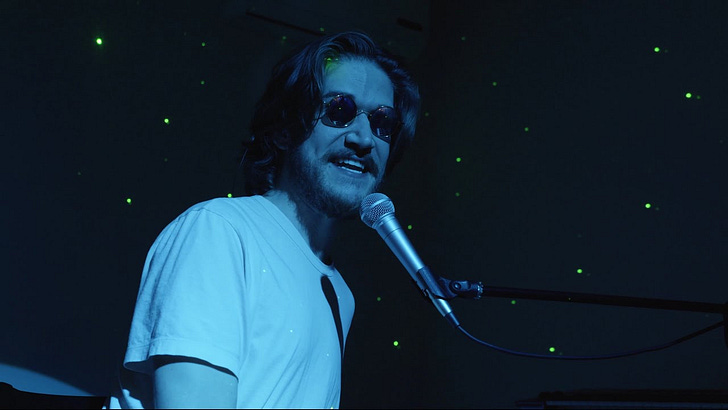
If there's a piece of media we could look at as a helpful contrast to "Inside" in terms of how it handles the themes of optimism/pessimism, meaning, and suffering, maybe the best point of comparison would be "Everything Everywhere All at Once". It's also pandemic-era. It's also partly about depression and suicidal ideation. If you wanted to hear an anti-thesis to Bo Burnham's "Inside", it's Waymond's speech to Evelyn on the street in Hong Kong:
"When I choose to see the good side of things, I'm not being naive. It is strategic and necessary. It's how I've learned to survive through everything.
I know you go through life with your fists held tight. You see yourself as a fighter. Well, I see myself as one too. This is how I fight."
I want to embrace this way of fighting.